Should You Test a Downriver Home for Radon Before Closing?
Why test a Downriver home for radon at all?
Because you can’t tell by looking. Radon is a gas you can’t see, smell or taste, and a test is the only way to know what a house has. About one in four Michigan homes tests above 4 picocuries per liter (pCi/L), the action level for fixing a home.
You might figure a newer house, a tight house or a well-kept house is in the clear. Michigan’s radon program says high radon has nothing to do with a home’s age, quality or upkeep, and any home can have it, old or new, slab or basement.
Your neighbor’s number won’t settle it either. A neighbor’s result can point to a problem in the area, but it doesn’t tell you what the house you’re buying has. That house gets its own test.
The health side is the reason this matters. Long-term exposure to radon raises the risk of lung cancer, and that risk is why the state pushes testing in the first place.
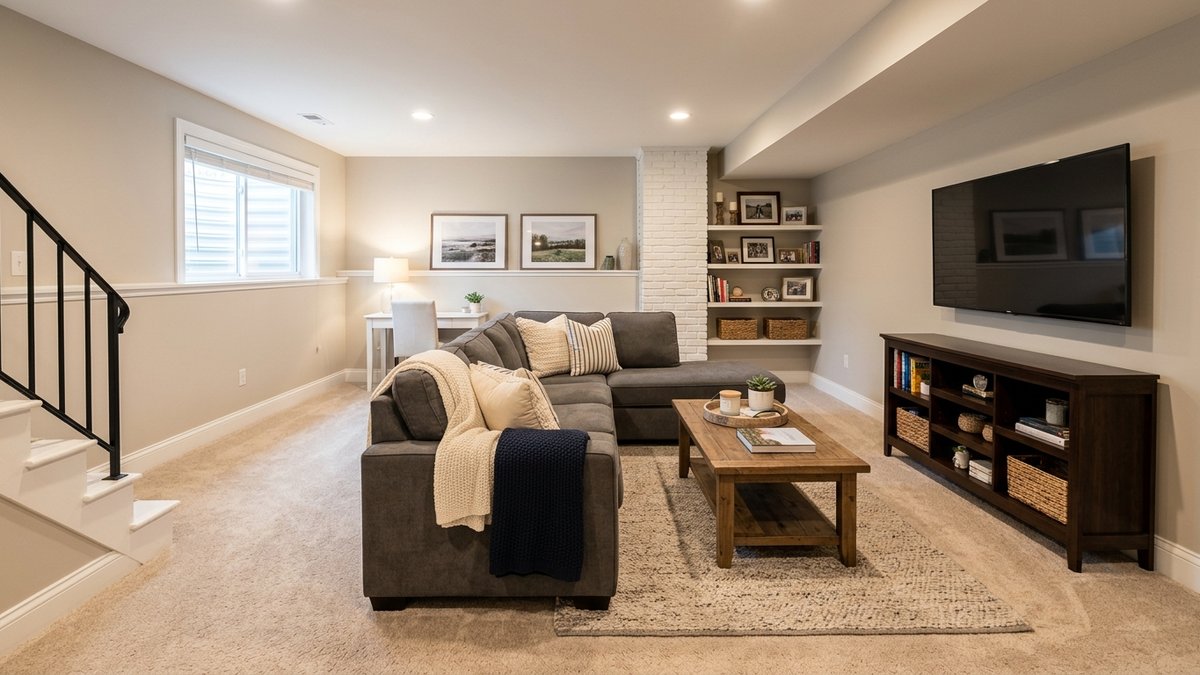
The good news is that high radon is one of the easier house problems to find and fix. So treat the test like any other inspection item. You want the number before you’re locked in, not six months after you move. If the house has a finished basement, or you plan to finish one and spend real time down there, that’s one more reason to get the number first.
How do you fit a radon test into your inspection window?
Plan it at the same time you book the home inspection. Book the test inside your inspection window, so the result comes back while you can still act on it.
You’ve got two basic routes. One is a certified tester. Michigan’s radon program points buyers to people certified by the National Radon Proficiency Program (NRPP) or the National Radon Safety Board (NRSB). When you book your inspector, ask whether they do radon testing, whether they hold one of those certifications, and how fast you’ll get the result.
The other route is a do-it-yourself kit. Local health departments get radon test kits from the state. In Wayne County, the county health department is on the state’s kit list, at 734-727-7400. Call ahead and ask what they have.
A kit can work well once you own the house. During a sale it’s trickier, because you’re testing a house you don’t live in yet, on a deadline, and you need the seller’s cooperation for access. You may find a certified tester easier to coordinate during the deal, and you can keep the kit idea for follow-up tests after you move in.
If your inspection period is short, ask the tester up front when results come back. Then line up a mitigation contractor you could call the same day, so a high number doesn’t eat the rest of your window.
Ask your tester what the seller needs to do while the test runs, and have your agent pass that along in writing. You don’t want a test redone because nobody told the seller the ground rules.
Whichever way you go, write the test into your plan with your agent before the inspection period starts. The home inspection guide for Downriver buyers covers how the rest of that window usually runs.
What if the seller says the house was already tested?
Ask for the full report, not just the number. A good seller test can save you a step, but only if it still fits the house you’re buying.
Look at the date first. If the test is older than about two years, plan on a new one. EPA says a buyer may ask for a new test when the last one isn’t recent, and it uses two years as the example. Retesting every two years is the usual advice anyway.
Then look at where in the house it was taken and who ran it. If the report doesn’t say which level was tested, or doesn’t name a tester, ask. If you plan to use a part of the house the seller didn’t test, ask your tester whether the old result covers it.
If the house already has a radon system, ask when it went in, who installed it and whether there’s a test showing the level after the system was running. Ask the seller how you’d know the system is working, and ask your radon tester to look at it.
If any of that’s missing, a new test is worth it on a house you’re about to spend a lot of money on. If you’re comparing a house with an old clean-looking number against one with no test at all, neither one has a current answer until you test it.
What does the radon number actually mean?
EPA recommends fixing a home when radon is at or above 4 pCi/L, which means putting in a mitigation system. That is an action level, not a safe-exposure cutoff.
So if the result comes back at 4 or higher, plan on a system. A high number by itself doesn’t have to end the deal. Radon can be brought down, and reduction systems work.
For a result from 2 to under 4 pCi/L, EPA recommends considering mitigation too, because there is no known safe level of radon exposure. Talk with your tester and agent about mitigation estimates and any request to the seller before your inspection period ends.
If the result comes back under 2, ask your tester what the number means for the way you’ll use the house. Keep the report with your closing papers and plan to retest in a couple of years. A lower result does not mean there is no risk.
If the number lands right around the line, or the test conditions weren’t clean, ask your tester whether a second test makes sense before you decide what to ask the seller for.
When the result is high, send the full report to the seller through your agent. Before you do, make sure it names who ran the test, where in the house it was placed and when, so your request has something solid behind it. Keep your own copy, too. You’ll want it again when you talk to contractors and again after the system goes in.
What does fixing high radon involve, and who pays?
Fixing it usually means a radon mitigation system. In plain terms, it’s a pipe that pulls air from the soil under the house and a fan that pushes it outside, so the radon doesn’t build up inside. EPA calls this soil suction.
The cost depends on the house. Most homes can be fixed for about the same cost as other common home repairs. To get a real number, get an estimate from one or more qualified mitigation contractors before your inspection period runs out.
Plan for some upkeep too. The fan eventually wears out, and replacing one typically costs a few hundred dollars. It’s also smart to retest at least every two years so you know the system is still doing its job.
When you call contractors, a few questions keep the estimates comparable:
- What certification do you hold?
- Where would the pipe and fan go on this house?
- What’s included in the price, and what could add to it?
- How will we confirm the radon level after the system is running?
Once you have a high result and an estimate, you’ve got options. You can ask the seller to install a system before closing, ask for a credit and handle it yourself after you move in, or adjust your offer. If the seller installs it, the materials and the look of the system are left to someone else. A credit gives you more control. Your agent and lender can tell you how a credit would be handled in your deal. The repairs versus credit guide walks through that trade-off, and the after-your-offer-is-accepted guide shows where it fits in the timeline.
Whatever you pick, get it in writing with your agent, and keep the test results and the installer’s paperwork. A future buyer may ask you for them.
Frequently asked questions
How common is high radon in Michigan homes?
Michigan's radon program puts it at about one in four homes above EPA's 4 pCi/L action level. That's a statewide figure, so the only way to know about a specific house is to test it.
Can I use my neighbor's radon result?
Use it as a hint, not an answer. A neighbor's result can point to a problem in the area, but it doesn't tell you what the house you're buying has. Test that house.
Where can I get a radon test kit in Wayne County?
Michigan's radon program lists the Wayne County health department as a test kit source, and the department's number is 734-727-7400. Call ahead to ask what's available.
The seller already tested. Is that enough?
It might be. Ask for the full report and the date. If the test is older than about two years, that's a good reason to test again.
What does it cost to fix high radon?
It depends on the house, so get an estimate from a qualified mitigation contractor. EPA says most homes can be fixed for about the same cost as other common home repairs.
Sources
- Michigan EGLE, Michigan Indoor Radon Program
- Michigan EGLE, Indoor Radon Program Overview
- Michigan EGLE, Radon in Real Estate Transactions
- Michigan EGLE, Find a Radon Test Kit
- Michigan EGLE, Over 25K radon kits distributed in Fiscal Year 2025 (January 22, 2026)
- Van Buren Charter Township, Radon
- EPA, What is EPA's Action Level for Radon
- EPA, How often should I test or retest my home for radon
- EPA, How much can a radon mitigation system cost
- EPA, How do I know if my radon mitigation system is working properly
Ready to talk strategy? Call David Goad at 313-319-7688.
If you want to dig deeper into the local market, check out the Downriver MI Real Estate Guide. And if you want to get a better feel for who I am and how I work, here's the About David Goad — Downriver Realtor page. If you're comparing agents and trying to figure out who really knows this market, this page on the best Realtor in Downriver MI gives you more context too.