Start with closed sales, not asking prices
The best starting point for pricing a Frenchtown Township home is the closed-sale record. Active listings show what sellers want. Closed sales show what buyers actually paid.
For the broader local context behind this article, start with the Frenchtown MI Real Estate Guide and the Downriver seller guide.
That distinction matters here because the public snapshots do not line up neatly. Realtor.com reported a median listing price of $159,450 for Frenchtown, with 95 homes for sale. Its recently sold page showed a median sold price of $184,250 for Frenchtown homes.
That spread does not give you one perfect number. It tells you to slow down before copying the lowest active listing or chasing the highest asking price.
A good pricing conversation should start with homes that actually sold near yours. You want the same township, similar property type, similar size, similar condition, and a recent closing date.
For many standard homes, I would rather build the first pricing range from the most relevant closed comp cluster. Then I would check that range against what buyers can choose today.
That is the work behind a real home value review. It is comparing what buyers have already accepted against what your home offers right now.
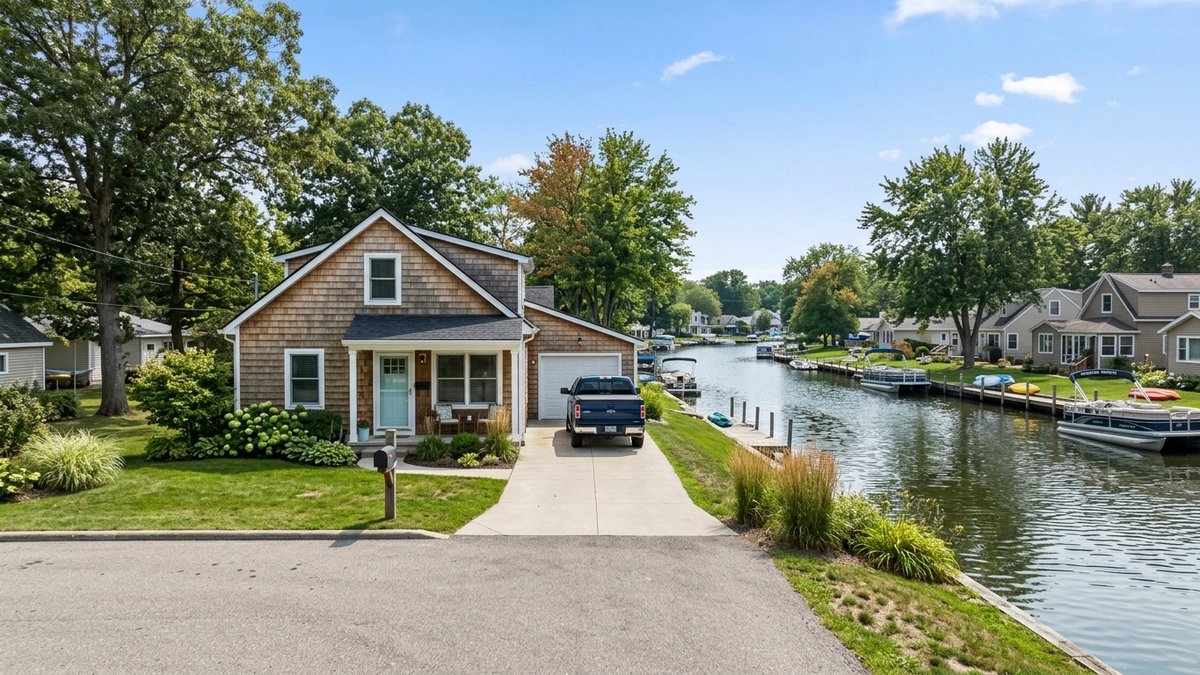
Frenchtown Township also has property types that can skew broad medians. A smaller in-town home, a larger lot, a heavily updated house, a river-adjacent property, or acreage can all move outside a simple median.
If you are deciding whether to list soon, ask what buyers paid for the closest substitutes to your house.
Why can Frenchtown pricing feel inconsistent?
Pricing can feel inconsistent because buyers compare your home against several moving targets at once. They look at recent sales, active competition, condition, payment comfort, taxes, and inspection risk.
Rocket Homes reported a $215,000 median sold price for Frenchtown Township in January 2025, up 7.5 percent year over year, with a $147 median price per square foot. That January 2025 snapshot sits above the Realtor.com sold-price median in the brief.
The lesson is not that one website is right and the others are wrong. Timing, source, property mix, and sample size matter.
A few higher-priced sales can pull a township snapshot up. A run of smaller homes can pull another snapshot down. A waterfront or acreage sale can make price-per-square-foot math look strange for a standard subdivision home.
This is why stale comps can hurt you. If you price from older, softer sales, you may leave money on the table. If you price from an outlier sale that does not match your house, you can sit too high.
A practical seller plan should read the market in layers:
- Closed comparable sales from the last 3 to 6 months.
- Pending sales if reliable details are available.
- Active competition buyers will tour this week.
- Your condition, updates, layout, lot, garage, basement, and inspection risk.
- The price points where buyers search online.
That last point is easy to miss. A price can be defensible and still land awkwardly in search. If buyers search up to $200,000, a price just above that line may reduce exposure.
Condition and updates decide where you fit
After the closed comps set the range, condition tells you where your home belongs inside it. Buyers do not pay the same for two homes just because the square footage is close.
A clean, well-maintained home with updated mechanicals can compete differently than a similar home with an older roof, older furnace, worn flooring, or deferred repairs. The gap often shows up during showings, inspections, and appraisal review.
You do not need to renovate everything before selling. You need to understand what buyers will see, what they may discount, and what could become a negotiation issue.
In Frenchtown Township, lot size and setting can also matter. A standard lot, a deeper lot, acreage, garage space, outbuildings, river proximity, and road location can change the buyer pool.
Before you choose a list price, walk through the home like a buyer would. Look at the items that affect confidence:
- Roof age, visible wear, and known leaks.
- Furnace, air conditioning, water heater, and electrical updates.
- Basement condition, moisture signs, and foundation concerns.
- Kitchen and bath condition compared with nearby sold homes.
- Flooring, paint, odor, cleanliness, and presentation.
- Exterior maintenance, driveway condition, garage, and yard usability.
None of those items automatically sets the price by itself. Together, they decide whether you should lead the market, match the market, or price with room for buyer objections.
This is where overpricing gets expensive. If buyers can buy a cleaner or more updated home nearby for the same money, your house helps sell the other one.
Do property taxes affect your list price?
Property taxes affect buyer payment comfort, but your tax bill should not be the main tool for setting list price. In Michigan, taxable value and market value do not move together in a straight line.
Frenchtown Charter Township explains that assessed value equals 50 percent of true cash value. SmartAsset summarizes Michigan’s taxable value cap as no more than a 5 percent increase from one year to the next, except in limited cases.
That means a long-time owner’s taxable value can lag behind current market value. A newer owner’s taxable value can look different after a transfer. Buyers may also see a different tax picture after purchase than you see today.
This is general real estate information, not legal, tax, lending, or financial advice. Verify tax questions with the township assessor, title company, CPA, attorney, or lender.
For pricing, the tax bill helps in two ways. First, it helps buyers estimate ownership costs. Second, it reminds you not to treat assessed value as a sale-price estimate.
Still, market pricing starts with buyer behavior. Closed sales, active competition, condition, and location carry more weight than last year’s tax bill.
For broader local context, the Downriver real estate guide can help you compare how nearby communities fit into the bigger Downriver and Monroe County market. Frenchtown is not identical to Brownstown Township, Trenton, or New Boston, but buyers often compare options across that larger area.
Choose a price with a plan
A strong list price should come with a plan for what happens next. You should know what good activity looks like, when to reassess, and what feedback matters.
If the home is priced correctly, you usually expect qualified showings, real questions from agents, and buyer feedback that fits the condition. You may not get an offer immediately, but the market should respond.
If the price is too high, the signals are different. You may see online views without showings, showings without second looks, or feedback that keeps pointing to the same objection.
That does not always mean you need a fast price cut. It means you need to compare the feedback against the original pricing evidence.
Before you list, decide how you will handle these scenarios:
- Strong traffic and strong feedback: hold the price and review offer quality.
- Strong traffic but repeated repair concerns: consider whether price or prep needs to change.
- Low traffic in the first 10 to 14 days: check price, photos, presentation, and search position.
- New competing listings: compare their condition and price against yours.
- A nearby pending sale: watch whether it confirms or challenges your range.
The right answer depends on your house, your timeline, and your risk tolerance. A seller who needs to move quickly may price differently than a seller with more time and a rare property.
I walk clients through this before we list because the price is not just a number. It affects showing traffic, appraisal risk, inspection negotiations, buyer confidence, and your net proceeds.
If you want a practical starting point, pull the closest closed sales first. Then compare your home honestly against each one. After that, look at the active homes a buyer would tour instead of yours.
That three-step review gives you a cleaner pricing range than a tax bill, a national estimate, or a neighbor’s asking price. It also gives you a plan if the market reacts differently than expected.
For most Frenchtown Township sellers, that is the difference between hoping the price works and knowing why you chose it.
Frequently asked questions
Should I price my Frenchtown Township home from active listings?
Use active listings as competition, not as your main pricing anchor. Closed comparable sales show what buyers actually paid. Active listings help you understand what buyers can choose right now.
How far back should I look for comparable sales?
Start with closed sales from the last 3 to 6 months when you can find enough similar homes. If the closest sales are older, adjust carefully for timing, condition, and market movement. A local review matters because broad township numbers can hide major property differences.
Does Frenchtown Township assessed value tell me my home price?
No. Assessed value and taxable value are tax-related figures, not a full market pricing answer. Frenchtown Charter Township says assessed value equals 50 percent of true cash value, but your list price still needs closed sales, condition, and current competition.
Can I ask more if my Frenchtown home is updated?
You can price higher than weaker comps when the evidence supports it. Updates, mechanical condition, layout, lot size, and presentation all matter. The key is comparing your updates against sold homes buyers already accepted.
What happens if I overprice my home at first?
Overpricing can reduce early showing activity and make buyers compare your home against better-priced choices. If feedback points to price, condition, or search position, you need to reassess quickly. The first 10 to 14 days often give useful signals.
Sources
Ready to talk strategy? Call David Goad at 313-319-7688.
If you want to dig deeper into the local market, check out the Frenchtown MI Real Estate Guide . And if you want to get a better feel for who I am and how I work, here's the About David Goad — Downriver Realtor page. If you're comparing agents and trying to figure out who really knows this market, this page on the best Realtor in Downriver MI gives you more context too.